December 8, 2025
What is it like to be on the Public Participation Task Force (PPTF)? Who better to answer that than our outgoing PPTF members!
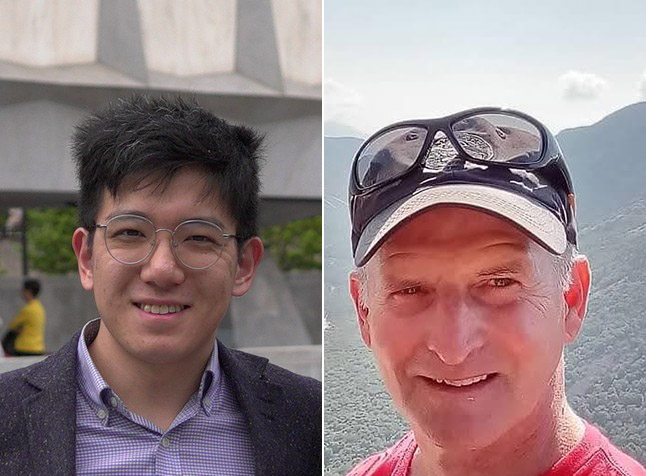
Curious what it is like to be part of the Public Participation Task Force (PPTF)? We asked the experts—two outgoing members, Ben She and Bill Matulewicz—who spent four years attending meetings, participating in committees, and bringing their voices into regional conversations.
The PPTF is a welcoming space where residents connect with DVRPC planners, explore timely issues, and share their lived experiences. It offers opportunities for members of the public to contribute their perspectives to transportation, funding, and planning decisions that affect their daily lives. In the reflections below, two members look back on their experiences.
Name: Ben She
Location: Philadelphia, PA
Organizations: 5th Square
Name: Bill Matulewicz
Location: Burlington County, NJ
Organizations: Delanco Shade Tree Commission, Environmental Advisory Board, Joint Land Use Board, Delanco Sewer Authority, BurlCo Solid Waste Advisory Committee, The Academy of Natural Sciences of Drexel University, Climate Resiliency Research Agenda Working Group (ANS), NJ Tree Foundation, Geological Association of NJ, Davis Phinney Foundation, and Parkinson’s Foundation
What inspired you to join the PPTF, and what were you hoping to contribute or learn?
Bill Matulewicz: Actually, I was turned on to the PPTF by Patty Elkis, the since retired deputy director of DVRPC. I was exploring new careers and was discussing a potential position with DVRPC over lunch with Patty. I was impressed with some planning concepts she had developed for the new light rail station in my hometown. While there didn’t appear to be an opening suited to my skill set, Patty suggested I apply to the PPTF to see what went on at the regional level.
Ben She: As a native of Greater Philadelphia, I wanted to know more about how transportation projects were developed and coordinated, ranging from a simple bike lane striping to a Regional Rail extension. I soon learned that DVRPC always seemed to have a plan on the books to guide stakeholders. With this in mind, I joined the PPTF as an aspiring city planner, wanting to help shape some of these plans and initiatives, and in the process converse with fellow residents on important issues in transportation and land use.
Can you share a memorable moment or highlight from your time on the PPTF? If nothing specific comes to mind, was there a project or issue that especially sparked your curiosity?
Bill: Some years ago I was reviewing grant applications for local municipalities in New Jersey as part of a Transportation Improvement Program (TIP) subcommittee. I felt I had a measurable impact on awards in a town I was very familiar with, having biked through it numerous times.
Ben: I quite enjoyed assisting in the creation of DVRPC’s online project engagement tool, which was first used for the City of Philadelphia’s Vision Zero: Cecil B. Moore Avenue plan. It’s a really easy and direct way to provide opportunities for direct stakeholder feedback from everybody, including those who might not have the time to attend a weekday evening meeting in person. I hope the platform can continue to be used by more municipalities and agencies so that DVRPC can aggregate responses and analyze broader trends in engagement to improve projects from the start.
What is something new you learned about regional planning through your PPTF experience?
Bill: I learned how complex the web of local transportation infrastructure is and how the quality of the transportation network can affect every element of our lives.
Ben: What I learned over the years is that regional planning is actually a very cyclical exercise, whose regular activities and responsibilities are shaped by federal regulations in order to be eligible for billions in federal funding grants. This includes the TIP, Long-Range Plan (LRP), Congestion Management Process (CMP), and other conformity processes. [This] can be seen as an opportunity for local officials to understand their wishlist projects at a systemic level and get help from DVRPC to shape their ideas to yield systemic regional benefits.
What would you say to someone considering joining the PPTF, and what kinds of interests or experiences do you think make someone a good fit for the task force?
Bill: I’d say bring your curiosity and an open mind. It helps to be civic minded, with a desire to improve the region served by DVRPC.
Ben: The PPTF has a basic dual responsibility for its members: learn DVRPC’s functional structure, work programs, and long-range goals, and transmit relevant information and engagement opportunities to one’s local communities. Through this, members should be able to think systemically and incorporate the experiences of others into their own worldview. It’s particularly important to elevate historically overlooked or disadvantaged transportation modes and groups, and the PPTF is a great forum to match the technical specialization of professionals with a myriad of lived experiences, which can help everyone make better-informed decisions and priorities.
Is there an organization, initiative, or fellow PPTF member you’d like to give a shoutout to?
Bill: I think the East Coast Greenway has done an excellent job of promoting trail creation, also the Net Zero safety initiative to keep the non-motorized public safe as they use the expanding trail network. Also the DVRPC PPTF staff, especially Shoshana Akins, who have kept the meetings interesting and engaging for my entire tenure.
Ben: I’d like to give a shoutout to 5th Square Advocacy, the urbanist advocacy group for Philadelphia who helped gain my bearings into city planning almost ten years ago now. Many fellow members like Chi-Hyun Kim and Jerrett Johnson have also been in the PPTF, and they and all 5th Square volunteers have contributed so much in helping to create a more livable city.
Our deepest thanks to Ben and Bill for their dedication to the PPTF! Their contributions, curiosity, and advocacy have made a real impact on the region and on those they served with. We are grateful for their time and their voices.
If their experiences spoke to you, we encourage you to apply. Applications for the 2026 cohort are due by December 21, 2025. Apply online: PPTF Application.
What does PPTF membership include? PPTF members:
- Learn about upcoming projects and initiatives.
- Share feedback on planning practices and public outreach strategies.
- Connect with DVRPC staff and fellow residents who care about their communities.
- Receive a stipend for their participation.
For more details about the Task Force, visit: PPTF info.